

Cooking A Ribeye On The Grill
This post includes affiliate links. As an Amazon Associate I earn from qualifying purchases.
If you ask any chef what he wants to eat on his night off, I'll bet a good majority of them will answer a steak. So if you want to learn how to grill a delicious steak house style steak…..read on.
So let's talk about steaks. Of course, we're not talking about just any steak, we want something dripping in deliciousness, oozing flavor and right off the grill. Hold your fancy compound butter and sauces, because we want to taste that amazing flavor that only fire can add to meat! Sorry, got a little carried away there and drooled all over my keyboard………
The summertime is the perfect time for grilling and once you learn the ins and outs of cooking over charcoal, you'll find yourself grilling steak house quality steaks throughout the year. It's really quite easy if you follow my simple rules.
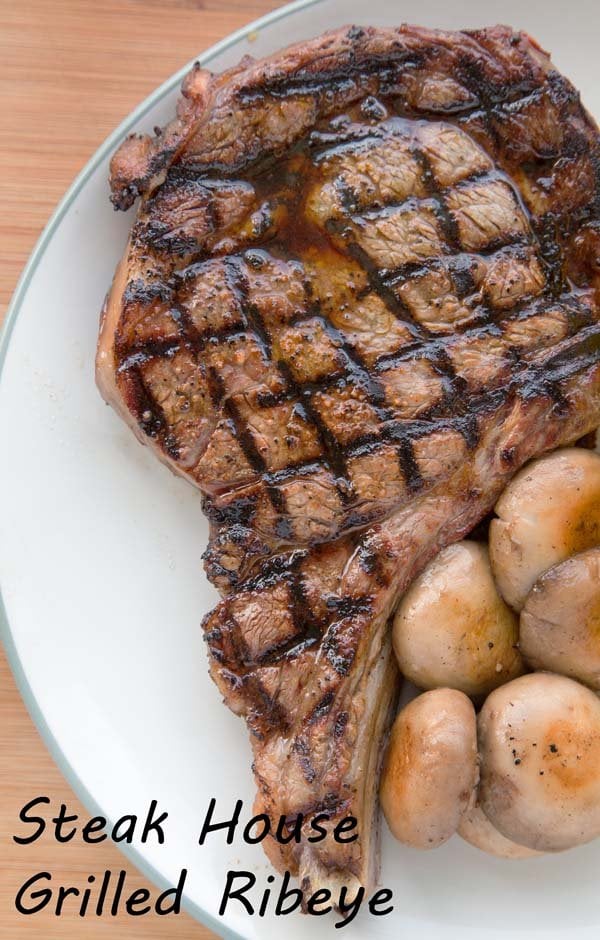
The first rule of Steak House – What kind of steak should I grill?
It's all about sourcing good ingredients. You must first begin with good-quality beef and the right cut. If you get good meat your grilled steaks will shine without any elaborate flavorings or tenderizers.
When choosing the right steak look to the USDA's grading system to assess quality. Beef that's labeled "Prime" is superior; "Choice" is next in the quality ranking and lastly is "Select" don't bother if this is all that's available.
What are the best types of steak for grilling?
Beef was made for fire and you'll find many types of steaks are perfect for grilling. These are some of my favorites.
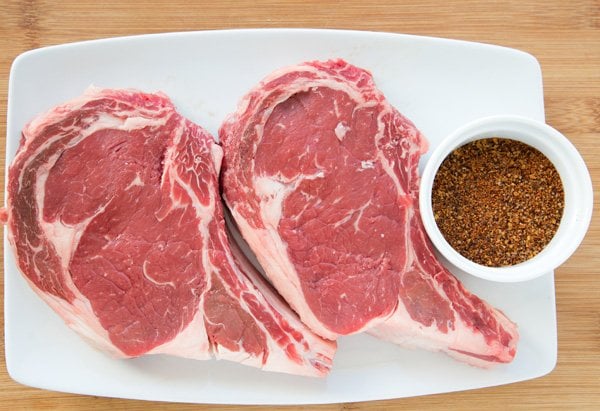
- Ribeye– this is my favorite steak to cook and to eat. This beauty offers a combination of tenderness and big, beefy flavor that you won't often find in other cuts of beef. I also prefer the bone in for appearance and for added flavor.
- Porterhouse – next on the list is really the King of Steaks in my book and only my recent love of ribeyes has moved it down the list. The Porterhouse steak is the best of both worlds including a perfect balance of the top loin (NY strip) with the tenderloin.
- T-Bone – this steak is similar to a porterhouse but is cut from closer to the rump. This makes the top loin (NY strip) side more tender but the tenderloin side is on the smaller side or non-existent.
- Strip Steak – aka New York Strip, Kansas City Strip or Strip loin. This steak can be as flavorful as a ribeye but a lot depends on the tenderness of this steak and can often disappoint.
- Tenderloin– although the tenderloin is the most tender piece of beef it's also leaner which means it's lacking in fat. And when it comes to steaks remember that fat adds flavor. This is not my favorite steak for grilling and can turn into a very expensive mistake.
Other options include Skirt, Flank, Flat Iron and Top Sirloin.
Ask your store butcher if you're not sure, otherwise what should be an epic culinary event will turn into a disaster.
The grading designations are largely determined by the amount of visible fat that's streaked throughout the muscle tissue, called marbling. Beef that's richly marbled gets a higher grade; it's more tender, juicy, and flavorful because the intramuscular fat melts and bastes the flesh during cooking.
Also, since fat insulates, marbling provides some insurance against overcooking. Look for small, evenly distributed specks of fat rather than larger and sparser ones whenever possible.
The second rule of Steak House is high heat. I'm talking seriously, searingly hot heat….get the picture? And that means starting with good charcoal or a very hot gas grill.
How to create a perfect cooking source for your steaks
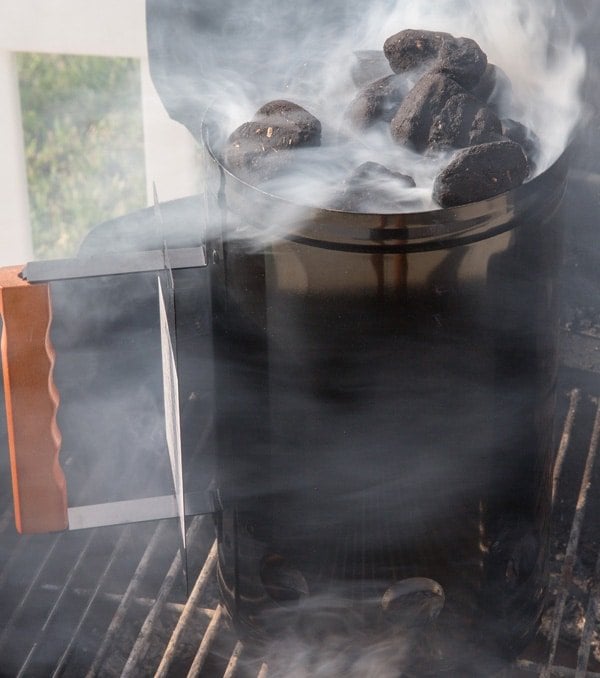
To get that really hot searing heat that creates the perfect steak, you need to fire up a full chimney of good quality lump charcoal or briquet. A Chimneys Starter is the easiest way to get a fast hot fire ready for grilling.
You can also light a pile of about 100 briquets. When the coals are ready, arrange them in a two-zone fire. Replace the top grate, allow it to heat up — all vents should be fully open.
You should always start with a clean grill and coat the grill by pouring cooking oil on a folded paper towel, oiling the grate using long-handled tongs to hold the paper oiled paper towels.
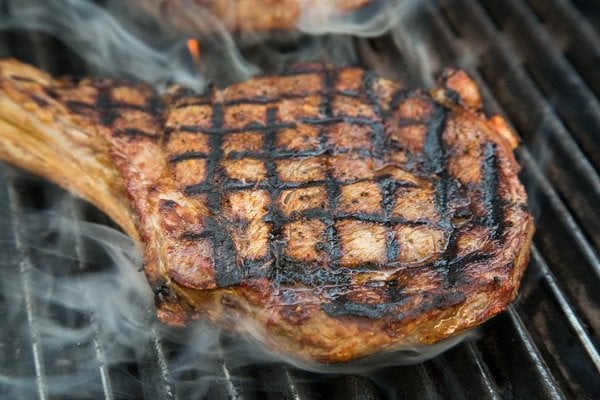
What is the Two-Zone method of grilling?
Grilling on charcoal or a gas grill doesn't change the fact that you really need to zones to cook food without burning it. This is also referred to as indirect heat.
The first zone should be the hottest part of your grill and the second zone on low heat or indirect heat.
What is Indirect Heat?
Indirect heat is abarbecue cooking technique in which the food is placed to the side of or above theheatsource instead of directly over the flame. This is easily accomplished by keeping the charcoal to one side of your grill, or in the case of gas burners half on and half off.
I have a four-burner gas grill and I usually keep the two outside burners on and the 2 inside burners off.
The Third Rule of Steak House -How to get the right internal temperature of your steak:
Learning to temp your steaks is almost as important as learning how to cook your steaks. So you can easily grill them to perfection for each of your guests.
And NEVER EVER CUT THE STEAK to see if it is done. Always use tongs to turn your steak.
While some say you should never turn your steak more than once, I like to get a nice crosshatch marking on my steak so although I don't flip it more than once, I do move it on the grill crossways to get those pretty cross marks on my steaks.
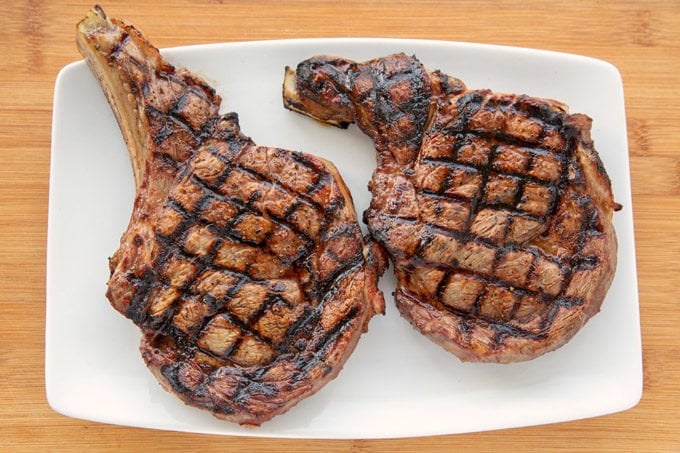
Over a hot grill, your steaks will cook rather quickly, going from very soft (very rare) to somewhat soft with a bit of a spring (medium) to quite firm (well done). Use the space on the top of your hand between your thumb and first finger to feel what a medium-rare steak should feel like.
Get in the habit of touching the steaks often to judge if they're done.
I absolutely love my Thermopro Wireless Digital Meat Thermometer. It takes all the guesswork out of cooking meats in the oven, on the grill, or in a smoker.
And undercooking is better than overcooking. You can always cook the steaks a little longer, if necessary. *Steaks will continue to cook once they're off the heat increasing the internal temperature from 5 – 8 degrees.
Why Does High Heat make my steak tastes better?
The surface of a steak tastes best when the high heat gets several important chemical reactions going. It might be a little TMI, but you can always impress your guests with your grilling knowledge!
The Maillard reaction is a chemical reaction between amino acids and sugars created by heat. Caramelization is the browning of sugar by oxidation under heat. There are small amounts of sugars in meat, that cause this reaction and give you that rich, complex, caramel or butterscotch flavor that makes your steak memorable.
There are also fats on the surface, and they contribute a lot to the flavor of the meat. When heat melts the fat and chemically alters it, the flavor is also drastically altered.
Fat reaches its most rich and succulent point when it becomes golden brown, just before it burns. While your steak is at best when the color is more of a nut brown. Blackening or charring a piece of meat is carbonization, and won't taste much better than the charcoal, so pay attention to what you're doing on the grill . Timing is everything!
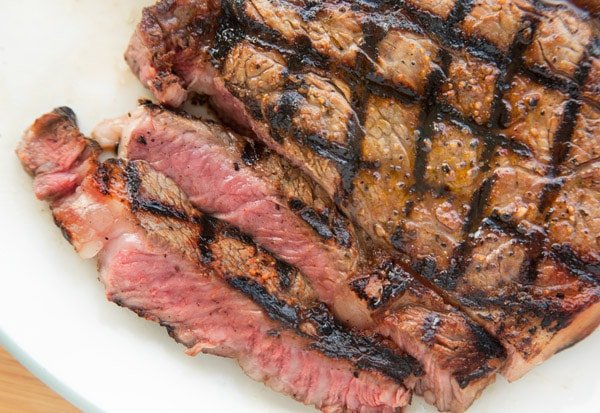
For me the rarer the better, while my wife likes no signs of pink, with her steak well done….sigh. It's proven quite challenging but also very satisfying when I get it right.
I also like to experiment with the seasonings I use, trying to masterfully create perfection. Many famous steak houses are known not only for their steaks but for the secret seasoning they use to create added flavors.
The last rule of Steak House- Do I need to let the meat rest before cutting?
The answer is most definitely yes! Allow the meat to rest for 5 minutes before serving. Take the steaks off the grill and cover them with foil, away from the heat. This gives all those wonderful juices time to return to the meat, giving you a tender and juicy steak.
All that's left is a sit-down and enjoy the deliciousness of a Steak House quality steak, cooked just right.
More Recipes You'll Love!
- Dry Rub Grilled Baby Back Ribs
- Ultimate Grilled Chicken Sandwich
- Grilled Shrimp and Pineapple Skewers
- Grilled Dry Rub Lemon Pepper Chicken Wings
How to Grill a Steak House Style Steak
Nothing beats a good ribeye and nothing beats a steak grilled over charcoal. But even if you cook over a propane grill you can still use my tips to turn your ribeye into a steak house style steak!
Prep Time 15 mins
Cook Time 10 mins
Total Time 25 mins
Course: Entree
Cuisine: American
Keyword: grilled ribeye, steakhouse steak
Servings: 2 servings
Calories: 629 kcal
- 2 bone ribeye steaks about 1 ½ inches thick each steak should weigh about a pound
- oil to coat grill
- sea salt and black pepper or your favorite steak house seasoning
My Seasoning blend
- 2 tablespoons Montreal steak seasoning
- 1 tablespoon brown sugar
- 1 teaspoon smoked paprika
- ½ teaspoon tumeric
- ½ teaspoon chili powder* optional
Prevent your screen from going dark
-
Remove the steak from the refrigerator and let it reach room temperature — around 30 minutes. Trim excess fat to avoid flare-ups, and vertically slash the thin piece of fat around the outside of the steak to keep it from curling. Liberally apply sea salt and black pepper(or your favorite steak house seasoning blend) . Flip the steak and repeat the process.
-
Light one chimney full of charcoal. When all the charcoal is lit and covered with gray ash, pour out and arrange the coals on one side of the charcoal grate. Set cooking grate in place, cover grill and allow to preheat for 5 minutes. Clean and oil the grilling grate.
-
Place the steak at the hottest part of the grate, directly above the coals, and let it sear for two to three minutes, then flip the steak and sear the other side for two to three minutes. (During the searing process, resist the urge to move the steak around with the tongs, as this will prevent optimal grill marks. Close the lid to prevent flare-ups.)
-
After the steak is properly seared, if it's not finished, move it to the warm side of the grate (not directly over the coals), close the lid and continue to cook the steak until it's at your desired temperature for doneness. You don't need to flip the steak during this indirect grilling stage.
-
Using a digital instant-read meat thermometer, check the temperature of the steak while it's still on the grill. Grill the steak to your desired taste: 130°F for rare, 135°F medium-rare, 145°F medium, 150°F medium well and 160°F for well done. Keep in mind that the steak will continue to cook a few degrees more when it's removed from the grill.
-
After removing the steak from the grill, place on a cutting board, loosely cover it with aluminum foil, and allow it to "rest" for five minutes (the temperature will continue to rise a few degrees while the juices redistribute into the meat).
Calories: 629 kcal | Carbohydrates: 9 g | Protein: 58 g | Fat: 41 g | Saturated Fat: 18 g | Cholesterol: 173 mg | Sodium: 151 mg | Potassium: 810 mg | Fiber: 1 g | Sugar: 6 g | Vitamin A: 640 IU | Vitamin C: 1 mg | Calcium: 60 mg | Iron: 7 mg
Cooking A Ribeye On The Grill
Source: https://www.askchefdennis.com/grill-steak-house-style-steaks/
Posted by: lavendermoserry.blogspot.com
0 Response to "Cooking A Ribeye On The Grill"
Post a Comment